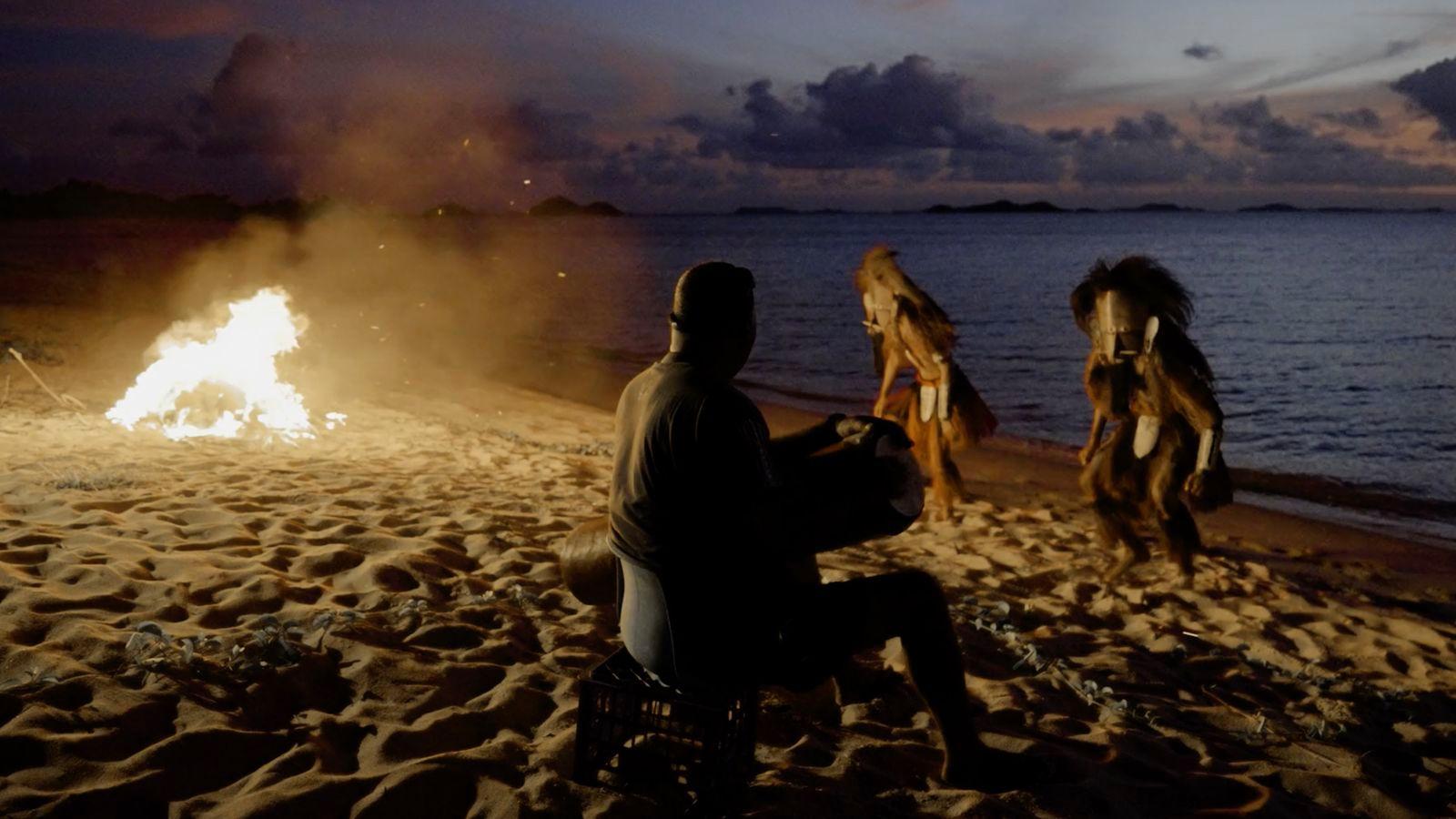
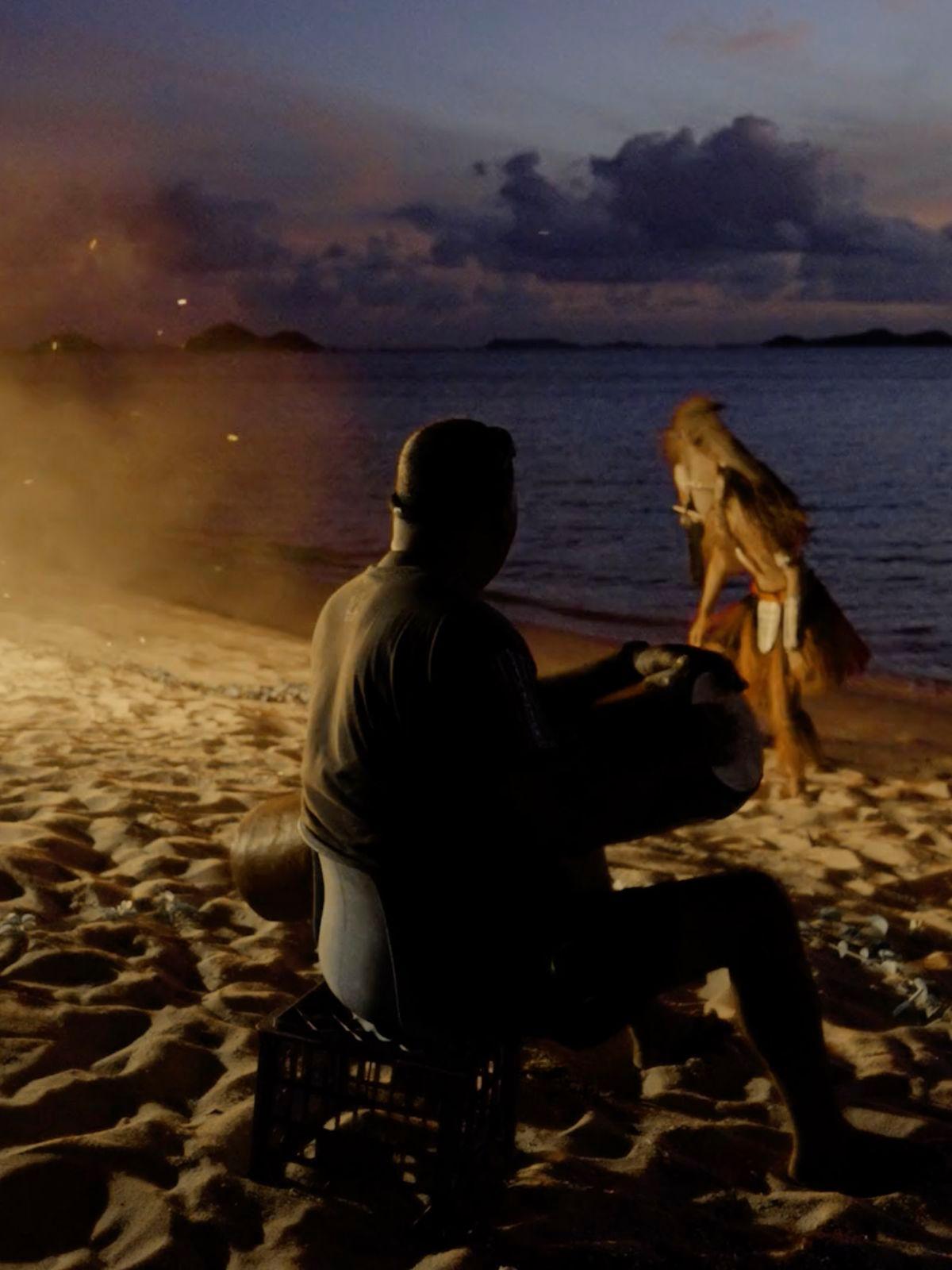
Life, Death & Magic
2000 Years of Southeast Asian Ancestral Art
13 Aug 2010 – 31 Oct 2010
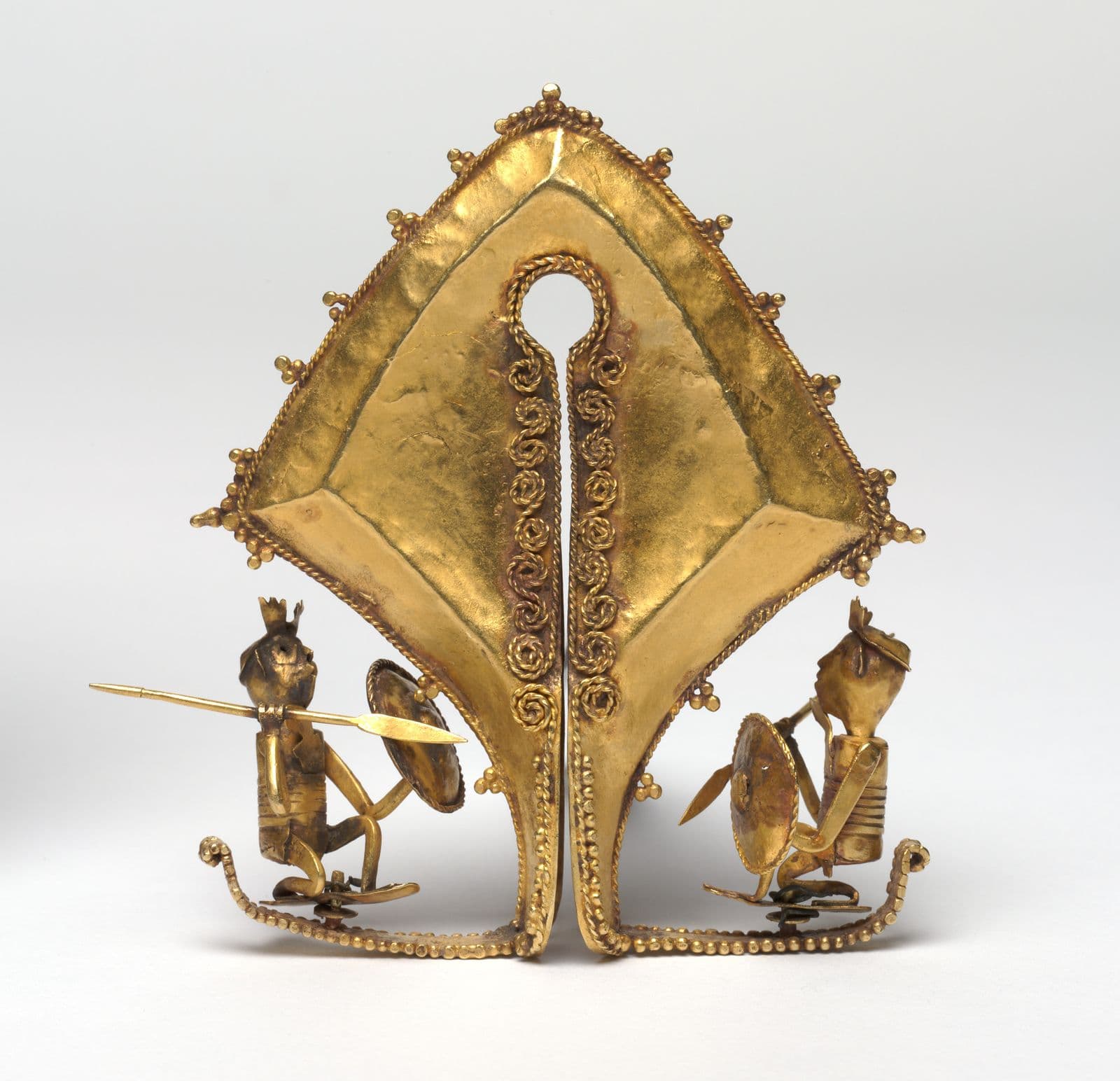
East Sumbanese people, Ceremonial ear pendant and sacred heirloom [mamuli], 19th century or earlier, purchased 1984
About

Life, death and magic: 2000 years of Southeast Asian ancestral art introduces the lively, often frightening, sometimes fantastic supernatural world of ancestors and nature spirits. The serene stone monuments, large gold ornaments, architectural decorations, huge ancient bronzes and images of mythical beasts, created to entice the divine and repel the demonic, date from prehistoric to modern times.
Exhibition Catalouge essay
Life, death and magic: 2000 years of Southeast Asian ancestral art is the first major exhibition of animist art from Southeast Asia to be held in Australia. The works of art originate from Indonesia, the Philippines, Malaysia, Vietnam, Taiwan, East Timor, Brunei, Thailand, Cambodia and southern China. For thousands of years, communities in these areas have created remarkable art expressing the region’s most ancient and enduring spiritual beliefs and social organisation. The exhibition celebrates the antiquity and continuity of animism as the inspiration for exquisite objects in bronze, stone, wood, gold and fibre.
Widespread before the introduction of Hinduism, Buddhism and, later, Islam and Christianity, ancestral and animist beliefs still survive in Southeast Asia, especially in remote islands and isolated mountainous regions. Animism centres on the power of nature spirits and the souls of the dead to intervene malevolently or benevolently in daily life. Beauty and ferocity are equally important in Southeast Asian animist art.
Pleasing designs attract the blessings of the ancestors while grotesque images dispel evil beings. Many objects on display in Life, death and magic are simultaneously appealing and menacing, even macabre.
Communities seek prosperity—abundant herds, successful crops and healthy children—in a precarious physical and supernatural environment, at the mercy of evil spirits and unpredictable forces of nature. Manipulation of magic, close adherence to rituals and the creation of powerful art are all central to pacifying the supernatural world and ensuring cosmic balance. Particular attention is paid to rites associated with important events in the life `cycles of humans and crops.
Planting and harvest, birth, marriage and death are occasions for special ceremonies. Utilitarian and ritual objects—clothing, jewellery, thrones, headhunting weapons, houses, vessels, weaving implements—are elaborately decorated with protective motifs to ensure clan prosperity and village wellbeing. Funerals, in particular, inspire the creation of spectacular works of art. The exhibition includes superbly decorated grave goods, elaborate coffins, fearsome protective funerary sculptures, shrouds and a spectacular array of sculptures and altars in honour of the recently deceased and distant ancestors. Objects used in magic are among the most mysterious in the exhibition and include shamans’ robes, magical staffs, potent amulets, sacred textiles and divination books.
Only on show at the National Gallery of Australia, Canberra, Life, death and magic combines loans from renowned institutions in Asia, Europe, America and Australia with works from the Gallery’s own rich collections of Southeast Asian textiles, gold ornaments and important recent acquisitions of sculpture.
Themes
For thousands of years across mainland and island Southeast Asia the deification of significant ancestors and the veneration of spirits of nature has formed the basis of traditional beliefs. It has also been the impetus for the creation of splendid and extraordinary works of art in fibre, stone, metal, wood and clay—made to protect and give pleasure to the living, to honour the ancestors and to secure safe passage for the human soul between this world and the afterlife.
Life death and magic: 2000 years of Southeast Asian ancestral art provides an evocative overview of the region’s ancestral arts and culture, from prehistoric times to the twenty-first century, and from Indonesia, the Philippines, Malaysia, Vietnam, Taiwan, East Timor, Brunei, Thailand, Cambodia and southern China. Key loans from renowned institutions in Asia, Europe, America and Australia are displayed alongside the National Gallery of Australia’s exceptional collection of Southeast Asian art. Life, death and magic is only on show at the National Gallery of Australia and is the first major exhibition of its kind to be held in Australia.
Origins & Continuities
Spectacular art has been created throughout Southeast Asia for thousands of years. Ancient burial sites reveal the beauty and complexity of objects from early civilisations across the region. The elaborately decorated pots, impressive bronze drums and bells, rich gold ornaments, and the striking array of weaponry were made to celebrate life and death. Splendid metal objects were also special items in elaborate systems of exchange along the great rivers of mainland Southeast Asia and the sea routes into the islands.
Similar objects, shapes and designs are prominent in the art of many Southeast Asian communities 2000 years later, where the finest valuables are often still buried with the dead. These continuities and similarities are most evident amongst societies who trace their beliefs and practices back to the ways of their ancestors. Numerous traditional communities across Southeast Asia maintain strong beliefs in benevolent and malevolent supernatural forces, from spirits of nature, the gods of grain and demons of pestilence, to the ever-present mythological creator deities and the souls of the recently deceased. Through festivals and rituals, and associated art, communities seek to appease disruptive forces, to gain protection and ensure survival, wellbeing and prosperity.
Fertility & Prosperity
Fertility—of people, land and livestock—is the constant focus of art and ritual in rural Southeast Asia. Large families, bountiful harvests and increasing herds are synonymous. All are signs of spiritual harmony and a confirmation of the balance of human activities and nature. The uncertainty and unpredictability of the physical and natural worlds provides the impetus for many rituals. Their enactments require and inspire great works of art.
Concern for the sustenance of fertility and plenty have long been central themes in Southeast Asian art. Motifs of abundance are emblazoned on all aspects of art and architecture. Grains of rice, herds of water buffalo, and many healthy children are the manifestations of prosperity. Their abundance is evidence of the blessing of the ancestors, and the tangible and symbolic outcome of the pairing of male and female elements that are fundamental features of the art of ancestral Southeast Asia. Imagery abounds alluding to the fecundity of ancestors in human form and of the domestic animals that Southeast Asian communities depend on for food as well as blood sacrifices to ancestral deities and nature spirits.
Power & Wealth
For at least 2000 years in many parts of ancestral Southeast Asia, power and wealth have been accrued by noble families, with social relations within a community ordered in hierarchical ways. Villages are divided between dominant and subservient clans and lineages, and governed accordingly. The superiority of one family over another is often dependent on genealogical and legendary descent from the founding ancestors of the village. This link to the ancestors ensures that the leading families control ritual activities and the opening of new agricultural land. The nobles who dwell in the great house claim direct descent from its original founders and to the inherited wealth and power imbued in the heirlooms of the house.
In some communities, and in certain arenas of endeavour, high status can be earned. Prowess in fields deemed economically and spiritually important can cement the fame of certain individuals, especially within the elite families. For women this is pertinent to skill in textile making, and especially a remarkable knowledge of dyeing. The feats of male warriors, headhunters, or great voyagers who return with exotic and rare objects for the family treasury, are much admired and rewarded with high status, often visually marked by distinctive accoutrements.
Magic
The ability to communicate with the spirit world is a significant path to power within a community. The precarious physical environment is further complicated by souls of the dead, ancestral spirits and nature deities interfering either benevolently or malevolently in human affairs. Communities rely on individuals with powers to communicate beyond the mortal realm in order to see, predict, mediate and control these uncertainties. Throughout Southeast Asia village priests, seers and shaman are highly esteemed and also feared for their extraordinary powers which are channelled to secure harmony and ward off disaster.
The widespread practice of sorcery requires village priests to perform rites that abate evil spirits and appease the gods. Priests and shamans require potent tools and medicines. Selecting the most auspicious day to hold a funeral, plant rice seeds, set out on a journey or headhunting expedition, or start the construction of a house requires expert supernatural authority. Through the consultation of magic paraphernalia, the correct moment is calculated for important activities to begin. Performed by village priests or ritual specialists, these procedures are essential means of maintaining the cosmic order, capturing lost souls, ensuring fertility and protecting villages against crop failure, war, epidemic and other disasters.
Death & Funerals
For thousands of years Southeast Asians have buried their dead with extraordinary care, laying out expansive graves filled with splendid gifts for the deceased and their glorification in the afterlife. In many animist cultures funerals continue to be the most spectacular and extravagant rites, for one of the most important tasks of the living is to ensure that the deceased are sent satisfied into the next world. To carry out these proceedings successfully the utmost consideration and the greatest art are required.
The recently deceased are the ancestors of the future, especially for members of the village elite. Enormous energy and wealth are expended on funeral rites to honour the dead in a manner appropriate to their social standing in the family and community. Lengthy and complex mortuary celebrations, sometimes held years after death, ensure a soul’s safe passage to the ancestral realm where it will oversee the activities and welfare of the living. Failure to appease a spirit can impel it to join the many other destructive spiritual beings capable of sabotaging the community’s quest for fertility and wellbeing.
Ancestors
In animist Southeast Asia the origins of all life, and of the skills, knowledge and materials that sustain human existence, were taught to the community’s forebears by the creating deities themselves. The most important features of landscape—from life-sustaining crops to topographical landmarks—are also the result of ancestral intervention.
Genealogies trace lineages back to significant ancestral figures as evidence of rights to superiority in the social and ritual arena of the village. More recent predecessors may also have attained the status of ancestral spirits, largely through the good offices of their living kin. Since ancestors continue to interfere, for good or ill, in everyday affairs, veneration through sacrifices, offerings, prayers and specific rites is necessary to ensure that their benevolence endures.
The creation and veneration of images of ancestors and creator beings is widespread among the peoples of Southeast Asia. The sculptures, which are attended to with great consideration, attract and are inhabited by the spirits of the dead. As ancestors are directly involved in fertility and plenty, pairs of male and female spirits are among the most prominent and important depictions.
Sponsors
Principal Partners
Australian International Cultural Foundation
Gordon Darling Foundation
Australian Government - National Collecting Institutions Touring & Outreach Program
Supporting Partners
Canberra Times
WIN TV Network
Novotel Hotels
Archived Site
The original website for this exhibition was published in 2010 and has been archived for research purposes.
Related
Asian Art Focus: Buddhist Art in Southeast Asia
27 Mar 1994
Theatre Arts of Asia
17 Dec 1994 – 5 Feb 1995
Bodywork
Australian Jewellery 1970–2012

7 Sept 2013 – 20 Oct 2015
Asian Art Focus: The Asian Landscape
6 Aug – 11 Dec 1994
Asian Art Focus: Dragons and Serpents in Asian Art
1 Apr – 31 Jul 1994
Bali
Islands of the gods

13 Jun 2014 – 3 Aug 2014